From “I can’t do this” to “I think I can.”
Our MathBridge Method™ helps neurodiverse learners move from panic and shutdowns to calmer, more confident math.

At Dyscalculia Tutoring, we specialize in helping students who learn and think differently build lasting math confidence—starting from exactly where they are now.
Most families who come to us have already tried the usual kind of tutoring that focuses on tonight’s homework or the next test. It can feel like tossing your child a life vest every time they’re drowning in math—helpful in the moment, but the next wave still knocks them over.
Our MathBridge Method™ is different. Instead of just keeping them afloat, we find the solid ground, build a sturdy bridge step by step, and walk it with your child until crossing that “hard math” river feels steady and doable.
We don’t just fix one worksheet or unit—we rebuild how your child experiences math, so they can start to think, “Maybe I really can do this.”
Who We Help (And Where They Usually Start)
Most of our students come to us after years of frustration—meltdowns over homework, shutdowns in class, or being told they’re “just not a math person.”
We break that cycle by:
Creating a psychologically safe space where it’s okay to make mistakes
Starting at the right level, not just the “grade level on paper”
Designing early, achievable wins so they can start to believe, “I can do this”
We don’t leave that as theory—we turn it into a concrete process.
The MathBridge Method™
Our 4-step process to help your child cross from “I can’t” to “I can.”
Our MathBridge Method™ is a four-step process we call Map, Spark, Build, and Sustain. It’s how we take students from “I can’t do this” to actually feeling steadier and more confident in math.
Step 1: Map

Step 2: Spark

Step 3: Build

Step 4: Sustain

You can think of it like building a bridge across a river:
First we find the solid ground.
Then we lay the first safe planks.
Next we build out the full structure with real supports.
Finally we walk it often enough that your child can cross more and more independently.
Step 1: Map
What we do
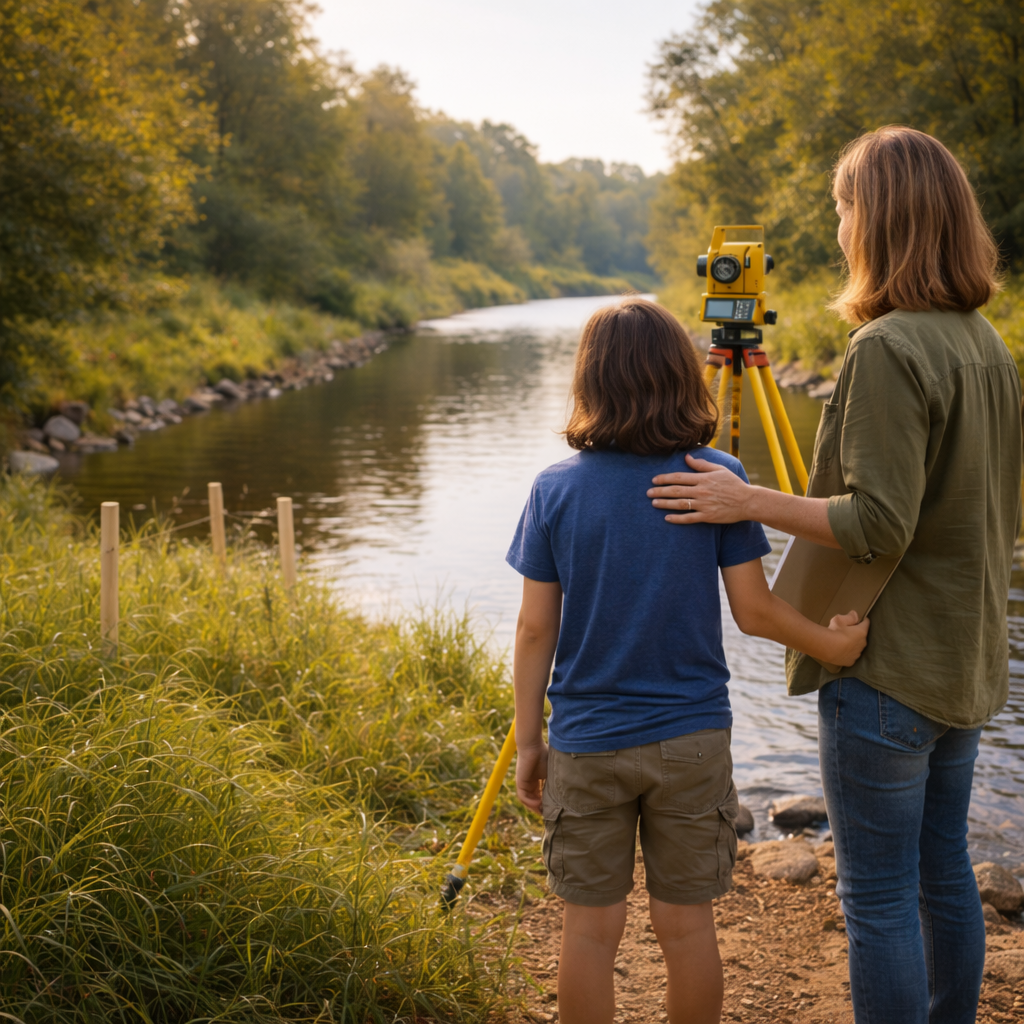
Instead of diving straight into tonight’s homework (or the thing that causes the biggest meltdowns), we start by mapping what your child already can do, how they think, and where things really break down—skills, strategies, and anxiety triggers.
Why it matters
It’s like surveying both sides of a river before you build a bridge: we have to find the solid ground and existing beams so we can build from strengths, not just chase gaps.
Step 2: Spark
What we do
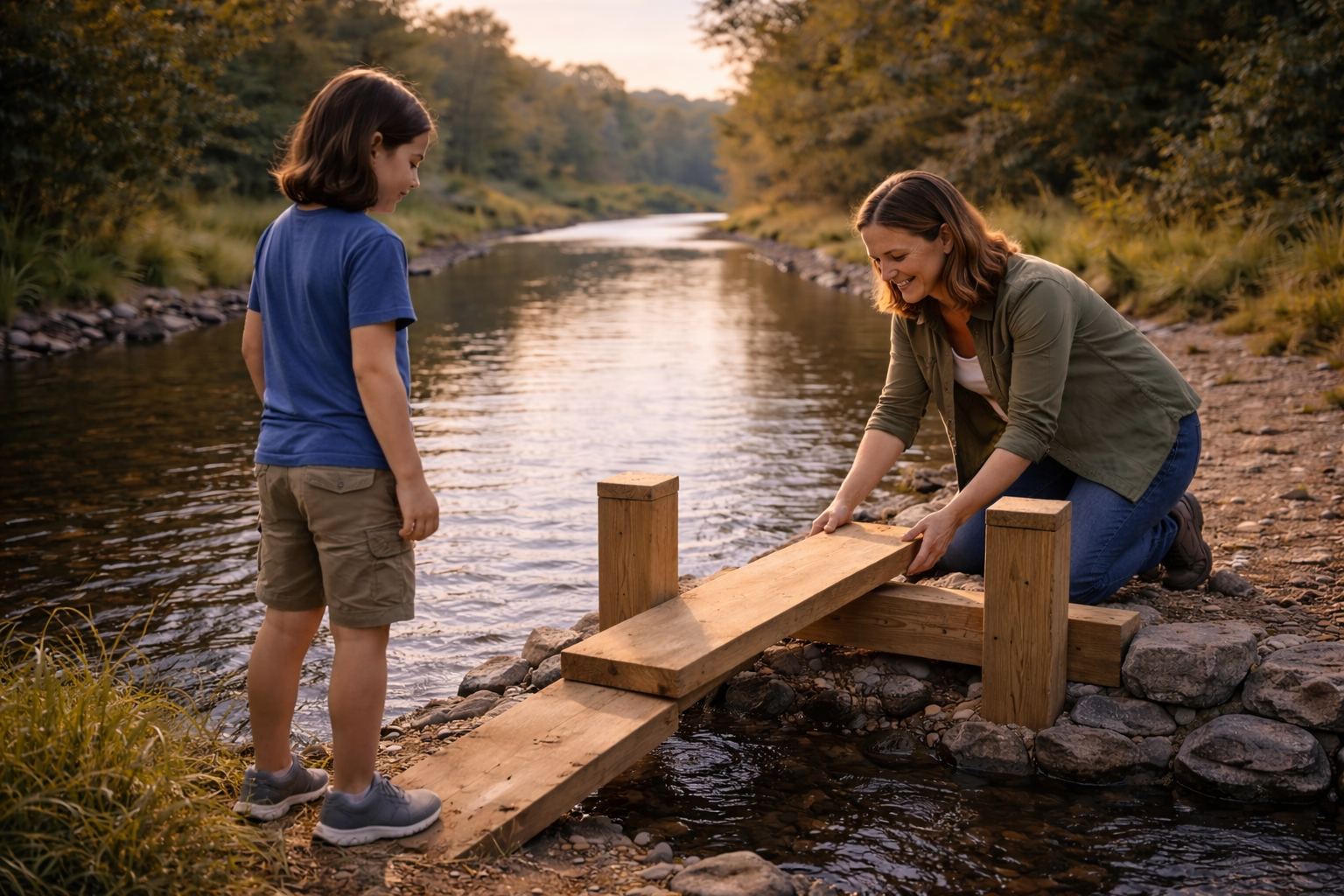
Once we know where the solid footing is, we design early wins on purpose. We take something your child already understands and use it to light up the new idea so they get those first, “Oh…maybe I can do this,” moments.
Why it matters
It’s like laying the first safe planks across the river—just far enough for them to feel, “This is possible,” instead of shutting down before they even start.
Step 3: Build
What we do
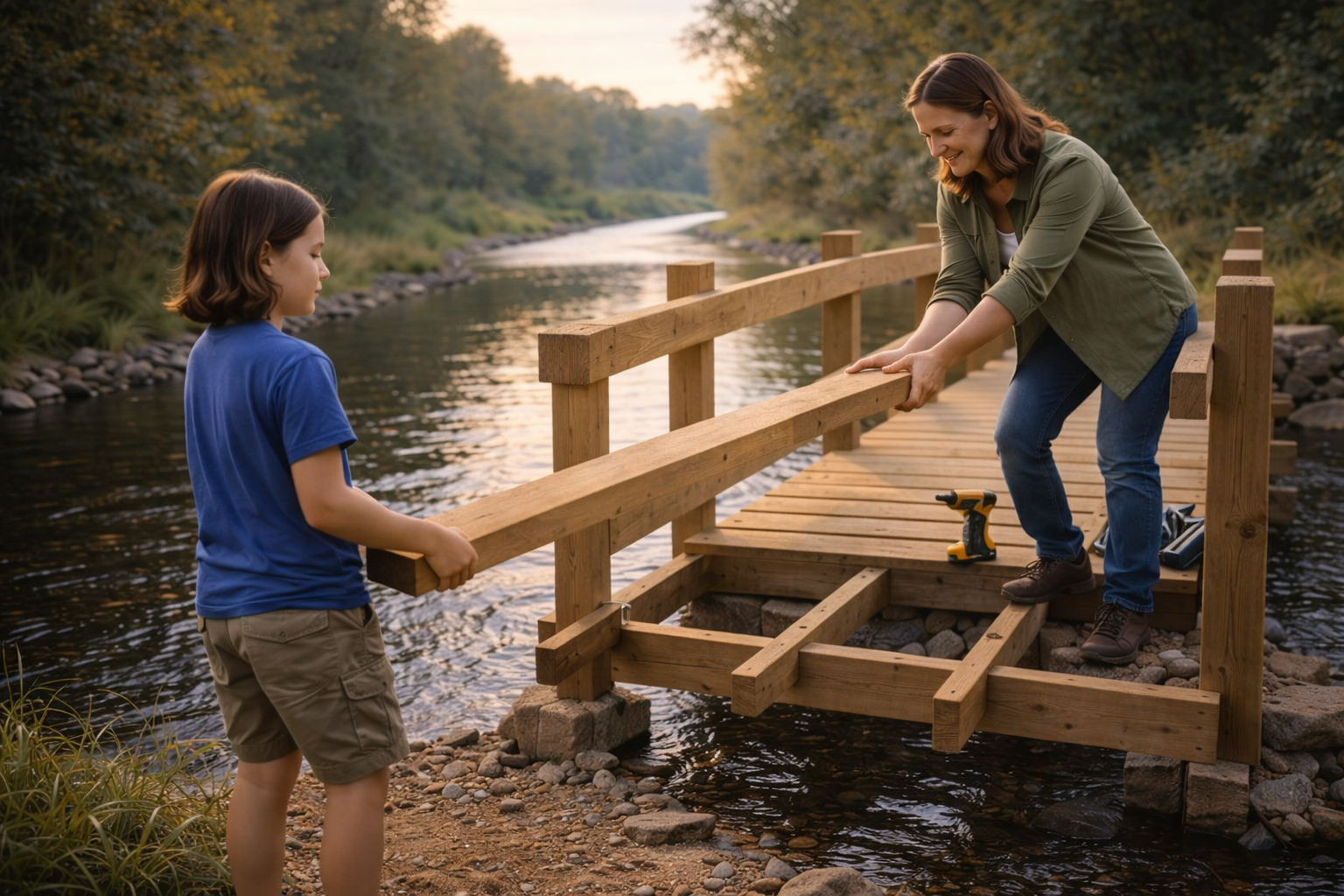
Here we use research-backed, multi-sensory, Concrete–Representational–Abstract (CRA) instruction to turn those little sparks into actual understanding. We go hands-on first, then visual, then symbolic, with the right scaffolds so new ideas have somewhere solid to land.
Why it matters
It’s like putting in the full bridge—supports, beams, and railings—so there’s a sturdy path from “I don’t get it” to “I actually understand what I’m doing.”
If the bridge ever feels shaky, we don’t throw your child a life vest and hope for the best—we strengthen the structure underneath them.

Step 4: Sustain
What we do
We know this is a long-term journey, especially for students with dyscalculia, ADHD, or working-memory challenges. We plan for more practice, repetition, and gradual fading of supports than a typical classroom. Over time, we remove scaffolds as your child is ready.
Why it matters
It’s like walking that bridge over and over until the route feels natural, then taking down the construction scaffolding because the structure—their understanding—can hold on its own in real math situations, not just when a tutor is right there.
What This Means For Your Family
When you put it all together, the Math Bridge Method™ means your child isn’t just getting help with tonight’s worksheet. They’re:
Learning in ways that match how their brain works
Experiencing early, deliberate wins that rebuild belief
Building real understanding, not just memorizing tricks
Practicing enough, with the right supports, to make it stick
Growing into a calmer, more confident math learner over time
And you’re not white-knuckling it alone. Our team partners with you, your child, and—when helpful—the school to keep everyone walking the same bridge together.